Showing posts with label Creation. Show all posts

Thursday, October 13, 2011

Keeping the Sabbath: allowing ourselves and the earth to just 'be'


Once upon a time, in a land far different to where we live today, people didn't go shopping on Sundays. None of the shops were open. They didn't go on the internet. The internet didn't exist. Instead they ate dinner or lunch around something called a dining room table and participated in the strange custom of enjoying each other's company. And this didn't involve Facebook or Twitter or text messages or Skype. Instead, they enjoyed each other's company face-to-face.

While we may laugh at these strange customs of people long ago and far different to ourselves, they actually had a reason for this Sunday behaviour. They found that reason in the bible, more specifically in the Ten Commandments. They actually took the fourth commandment, to remember the Sabbath day and keep it holy, seriously.

Of course we realise now how silly that was. Because who wants to obey one of God's commandments when you can shop?


But would our lives really be any worse if we got back to the fourth commandment? I suggest they would be much better. The Ten Commandments aren't there just because God felt like making a few rules up. They are for our own good. And that includes the fourth commandment, arguably the most neglected commandment of the lot.

Our lives are filled with so much 'doing'. The Sabbath gives us permission to simply 'be', to enjoy each moment as it comes instead of racing off to check the next item off the to-do list. You are more present for the people around you, rather than seeing them as a distraction or an obstacle. You are also more present to what's around you. You are free to enjoy the trees and the birds and the sun and the flowers when they're more than just scenery on the way to your next appointment. These moments of just 'being' are important for our souls.

Keeping a Sabbath day also gives us time to reconnect with the family and those that are important to us. Today more than ever, many of us spend most of our time away from other members of the household. We work in different places. We fill up our leisure time with various activities. A family needs more than just blood ties and a common roof. It needs time of connection and communication. It needs time to just 'be' in each other's presence.

Furthermore, ignoring the Sabbath is bad for the earth. One more day where we can shop is one more day where we're likely to buy things that we don't need. Is there anything that important that it can't wait until Monday before we purchase it? Is the world really going to fall apart if there's one day when we can't shop? I would love to see all shops close again on Sundays. It seems ridiculous, when we know the ecological damage our lifestyles cause, to stick to this idea of having the shops open as long and as often as possible. If we went back to no Sunday trading, not only would it enable a lot of people to spend time at home with their family instead of at work, but it would cut down 'boredom-spending'. I'm sure that most of the things that are bought on Sundays are only purchased because people want something to 'do'. They've lost the ability to simply 'be'.

It's interesting that the fourth commandment tells us not only to rest ourselves on the Sabbath, but that all of our family, all of our workers, the stranger within our gates and even the cattle are to rest. The commandment is not just for us. It's for everyone - including the animals. I would suggest that the Sabbath is also for the earth.

The earth needs a chance to just 'be' as well. And when we let the earth just 'be' and let ourselves just 'be' in the earth, we gain something that can never be gained by 'doing' things and by 'using' the earth.

The bible is full of verses that tell us that the earth shows us something of God. Just one instance of this is Romans 1:20, where Paul tells us that men have no excuse for not knowing God, for he can be seen in the things he has made. And yet I think we miss out on a lot of that. Creation may be telling us about God. But we're not hearing it because we're too busy to pay attention. Just 'being' in nature gives us the space and the opportunity to really listen to what it has to say.

We make such huge demands on the earth's resources all the time. Imagine if we used the Sabbath to actually give the earth a break. Switch off the mobile phone and the computer. Use as least electricity as possible. Don't drive and don't shop. If everybody did this for just one day a week, it would reduce our impact on the earth.

And it would actually improve our lives in the process. Without technology and the malls demanding our attention, we would be free to give our attention to what really matters - our God, our family, our earth and our souls.


Thursday, September 22, 2011

Special attachments to nature


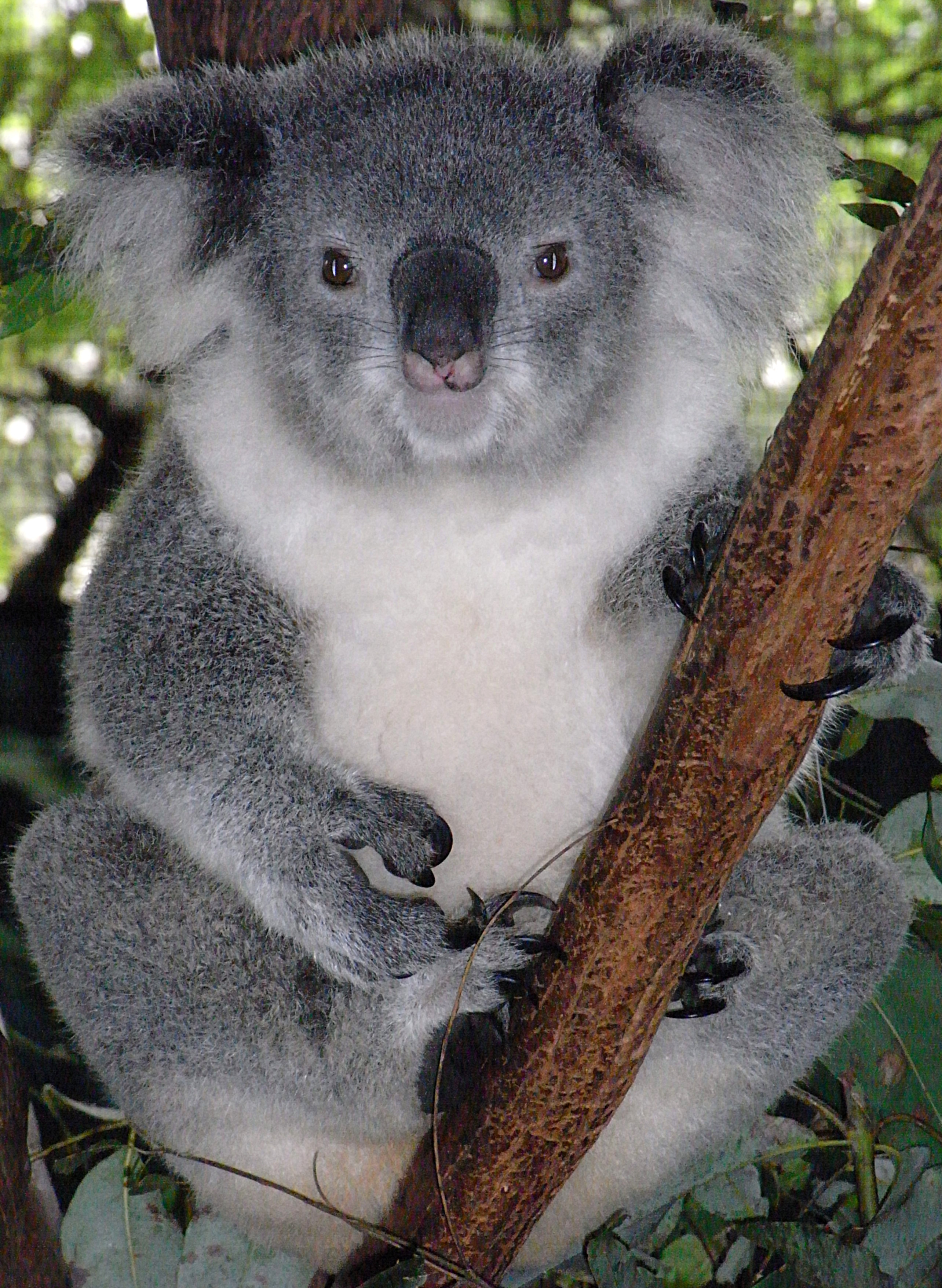
Today I read an article that told me that the koala is highly vulnerable to climate change. This is according to the International Union for the Conservation of Nature Today and places it in a list of only 10 species in the world.

Koalas, people and climate change: not a good mix by Christine Adams-Hosking


I visit a lot of environmental sites and read a lot of environmental newsletters. So I'm used to hearing bad news. But this article hit me in a way few other articles have.

My son loves koalas. He has about 10 stuffed toy koalas, along with a variety of other koala-related items. We pray for koalas quite often in our bed-time prayers. When he hears about koalas that are hurt or injured, he gets upset. He even once wrote a letter to Peter Garrett asking him to protect koalas. If you've ever wondered why there's a koala on this page, it's not just because it's an Australian animal. It's because my son loves koalas. In fact, he chose the picture.

I've always liked koalas. They're cute. They look cuddly. They're Australian. What's not to love? But I care about them a lot more now than I used to. My love for my son means I care about what he cares about. I consider koalas valuable because my son places value on them. He calls koalas good and I agree.

Just as I love my son, I also love God. And just as I value those things that are my son cares about, I should also value those things that God cares about. God wasn't just looking at koalas when he saw that they were good. He was looking at the whole of Creation. My care for nature must not stop with the koalas that my son calls good, but must extend to every part of the Creation that God calls good.

In saying that, though, we are finite creatures and cannot care for the whole of Creation in the way that God does. I'm afraid I'm never going to be able to look at a rat the same way I look at a koala. And my dog has far more worth in my eyes than any fleas or ticks that might attack him.

Therefore, I think having a special attachment to a something in nature (whether that be an animal, a plant, a pet or a place) is a good thing. We can never come close to the love God has for all Creation. But in developing a special attachment to one part of nature, we may feel a tiny part of what God feels for all of nature. We may care about all nature, we may even love many parts of nature. But that special attachment to one part of nature takes that care and love to a new level - a level that cannot be sustained on a worldwide level. The picture on the TV screen of one individual hurting animal often impacts us in a way that statistics about the entire species cannot. When we have a special attachment for that specific animal, we are impacted even more.

I suspect that there are a few Australians who may not care at all about the polar bears, but who will care about the koalas. It's part of human nature to care most about those things that are closest to us. While we must not limit our care for nature to only those things that are close to us, I don't think caring more for specific parts of nature is necessarily a bad thing. It is through caring deeply about something specific that we often learn to extend that care out towards all of nature.

None of us loves every person in the world the same way God does. While we try to love all human beings and believe that all human beings have value, we naturally care more about the people that are closest to us. I love my sons, my family and my friends more than I love the person I pass on the street and just say hello to. And I care for that person more than I care for someone living in France who I've never met. And yet loving these people that I do know helps me to feel love and empathy for those that I don't know.

If someone told me that they loved all human beings, but had no one human being that they particularly loved, I would wonder how well they really loved human beings. And yet often I think we talk about care of nature in very general terms, without delving deeper into the specific relationships people have with parts of nature. And I would say that our highly mobile society means we are less likely to form those attachments to nature in terms of place. It is when we become familiar with a particular place, that we often develop an attachment for the birds, the animals and the plants that belong to that place.

Yes, God calls all of Creation good. And yes, God cares for it all. And as we seek to follow God, we must recognise the intrinsic value of all of nature, as opposed to only seeing the value of things that provide benefits to humans. However, I don't believe this means we need to try and care for each part of nature exactly the same way. Nor does it mean that we should avoid cultivating a special attachment to certain parts of nature. It is through those attachments, that our love for nature may most closely mirror God's own.  


Wednesday, February 23, 2011

Message for the celebration of the World Day of Peace 2010

Message for the celebration of the World Day of Peace 2010

The message that Pope Benedict XVI gave on 1 January 2010, for the World Day of Peace starts with the words, ‘If you want to cultivate peace, protect creation’. Throughout the message he gives many valid reasons as to why Christians should care for Creation and how this will help promote peace. The message is well worth reading in its entirety, but I have copied some parts of it here. You can find the entire message here:

Message for the celebration of the World Day of Peace 2010


EXTRACTS FROM POPE BENEDICT XVI’S MESSAGE FOR THE WORLD DAY OF PEACE 2010.

The environment must be seen as God’s gift to all people, and the use we make of it entails a shared responsibility for all humanity, especially the poor and future generations.

Contemplating the beauty of creation inspires us to recognize the love of the Creator, that Love which “moves the sun and the other stars”

Can we remain indifferent before the problems associated with such realities as climate change, desertification, the deterioration and loss of productivity in vast agricultural areas, the pollution of rivers and aquifers, the loss of biodiversity, the increase of natural catastrophes and the deforestation of equatorial and tropical regions? Can we disregard the growing phenomenon of “environmental refugees”, people who are forced by the degradation of their natural habitat to forsake it – and often their possessions as well – in order to face the dangers and uncertainties of forced displacement? Can we remain impassive in the face of actual and potential conflicts involving access to natural resources? All these are issues with a profound impact on the exercise of human rights, such as the right to life, food, health and development.

Human beings let themselves be mastered by selfishness; they misunderstood the meaning of God’s command and exploited creation out of a desire to exercise absolute domination over it. But the true meaning of God’s original command, as the Book of Genesis clearly shows, was not a simple conferral of authority, but rather a summons to responsibility.

Man thus has a duty to exercise responsible stewardship over creation, to care for it and to cultivate it

Sad to say, it is all too evident that large numbers of people in different countries and areas of our planet are experiencing increased hardship because of the negligence or refusal of many others to exercise responsible stewardship over the environment.

Future generations cannot be saddled with the cost of our use of common environmental resources.

The ecological crisis offers an historic opportunity to develop a common plan of action aimed at orienting the model of global development towards greater respect for creation and for an integral human development inspired by the values proper to charity in truth.

There is a need, in effect, to move beyond a purely consumerist mentality in order to promote forms of agricultural and industrial production capable of respecting creation and satisfying the primary needs of all.

It is becoming more and more evident that the issue of environmental degradation challenges us to examine our life-style and the prevailing models of consumption and production, which are often unsustainable from a social, environmental and even economic point of view.

he Church has a responsibility towards creation, and she considers it her duty to exercise that responsibility in public life, in order to protect earth, water and air as gifts of God the Creator meant for everyone, and above all to save mankind from the danger of self-destruction.

Nor must we forget the very significant fact that many people experience peace and tranquillity, renewal and reinvigoration, when they come into close contact with the beauty and harmony of nature.

For this reason, I invite all believers to raise a fervent prayer to God, the all-powerful Creator and the Father of mercies, so that all men and women may take to heart the urgent appeal: If you want to cultivate peace, protect creation.